





Connecting Experience
How to Start

Activities are divided by SDGs. There are several tasks for each goal. You can explore tasks by clicking on the icons of particular SGD.

Download the activity sheet. You can adjust the course of your activity taking into account local context and the number and age of participants.

By doing activities, you collect points. For each activity your group accomplished, you will receive 10 points. Once your group has earned a certain number of points, you can award your scouts/guides a badge: bronze for 30 points, silver for 90 points and gold for 150 points. The badge template is downloadable here.

In addition to the activities based on the SDGs, we have also prepared activities connected with Poland as a host country of the Jamboree — feel free to use those activities as well.
Activity Pack
Explore and download activities packs and supporting resources:

CE During the Lockdown
Despite the fact, the CE is designed for face to face meetings of patrols/groups, during the period of COVID-19 lockdown we encourage you to use tasks marked with ilustration on the left side to encourage your scouts and guides to begin action whilst still at home.
Download
Here you will find all activity suggestions in one pdf file.
Here you will find the award projects in “png” version to download.
CE Challenge: Beehives for Points
Participants will be rewarded with points for completing tasks. It’s simple – the more tasks they complete, the more points they get. The point-based system is a perfect solution for those who like to see that their ACTions deliver results. As the European Jamboree programme concentrates on ACTion and co-operation, we all have the opportunity to make a real difference. Each time the participants score 10,000 points altogether , one real hive will be built in Poland! Thanks to the hard work and commitment of our Scouts & Guides, the bees’ population will be rebuilt.
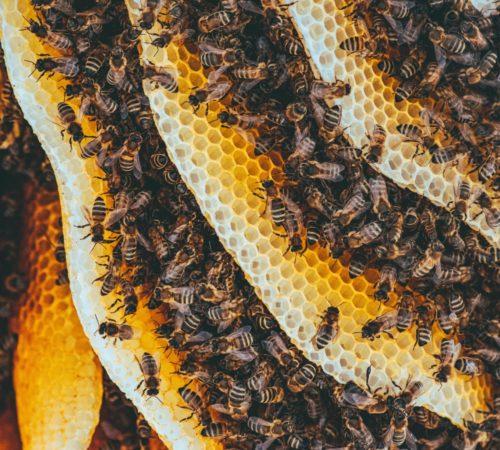
The programme concept is based on the idea of protecting bees and the areas where hives can be found. Why bees? This is because bees are responsible for the welfare of many plants, important to agriculture and, more generally, the balance of the ecosystem. Three-quarters of what we eat is created as a result of the bee’s tireless work. Unfortunately, bees continue to be endangered by environmental changes around the world. What will happen if they disappear? The answer is quite simple. Plant production will decrease by 75%, and a third of crops will need to be pollinated in alternative ways.
The Role of Scout/Guide Leader
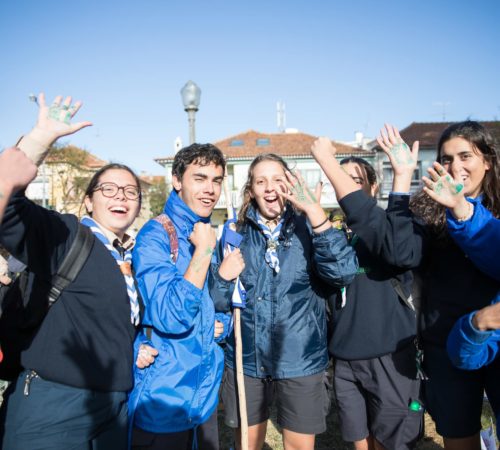
Being a youth leader is one of the most influential roles within informal education organisations. This is why Scouting and Guiding encourages members to engage with some of the most important global issues.
Have you ever heard of the United Nations’ Sustainable Development Goals (SDG’s)? Have you ever had the opportunity to learn more about them? If you have, have you ever wondered how you can introduce them to your young people?
The Sustainable Development Goals
The Sustainable Development Goals (SDGs), also known as the Global Goals, were adopted by all United Nations Member States in 2015 as a universal call to action to end poverty, protect the planet and ensure that all people enjoy peace and prosperity by 2030.
The 17 SDGs are integrated—that is, they recognise that action in one area will affect outcomes in others, and that development must balance social, economic and environmental sustainability.
Through the pledge to Leave No One Behind, countries have committed to fast-tracking the progress concentrating on those who are furthest behind first. That is why the SDGs are designed to bring the world to several life-changing ‘zeros’, including zero poverty, hunger, AIDS and discrimination against women and girls.
Everyone is needed to reach these ambitious targets. The creativity, knowhow, technology and financial resources from all of society is necessary to achieve the SDGs in every context.